AI Outputs You Can Actually Stand Behind

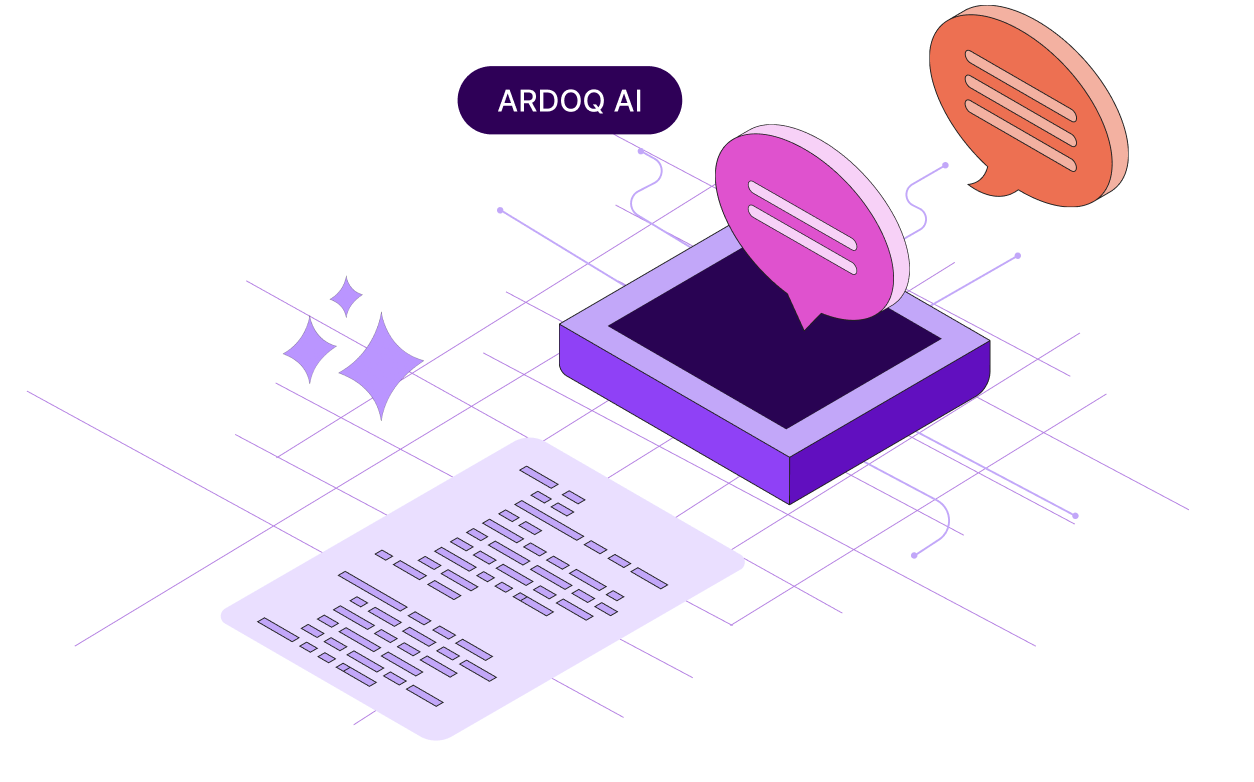
Ardoq's AI features are built on your architecture so every answer is traceable, auditable, and defensible when it matters most.

cover

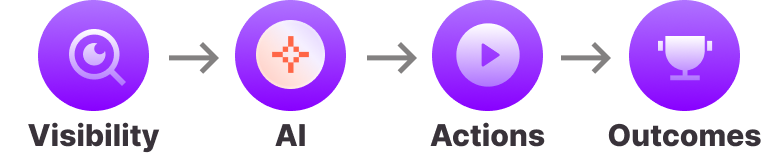
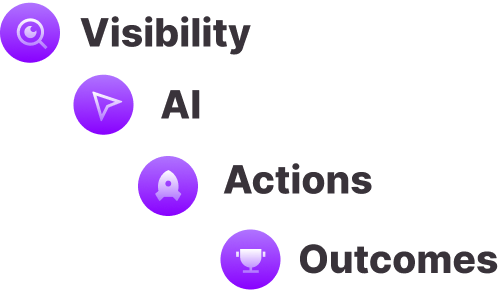
Visibility - Strategy - Execution - OutcomesVisibility - Strategy - Execution - Outcomes

The AI-first Enterprise Architecture Platform

Hand 40% of tasks to Ardoq's AI Architects

Stop spending 40% of your week on work AI can do faster and better. Ardoq’s AI Architects automate routine tasks — from root cause analysis to app ownership discovery — so your team focuses on strategy, not documentation.

Learn More
On-Demand-Ai-Architects

AI That Anyone Can Use, Understand and Trust

Ardoq translates complex architecture into plain-English insights and business-ready outputs — value streams, capability maps, and board-level ROI analysis — without a single SQL query. EA finally speaks the language of the boardroom.

Learn More
Business-Centric-AI-2

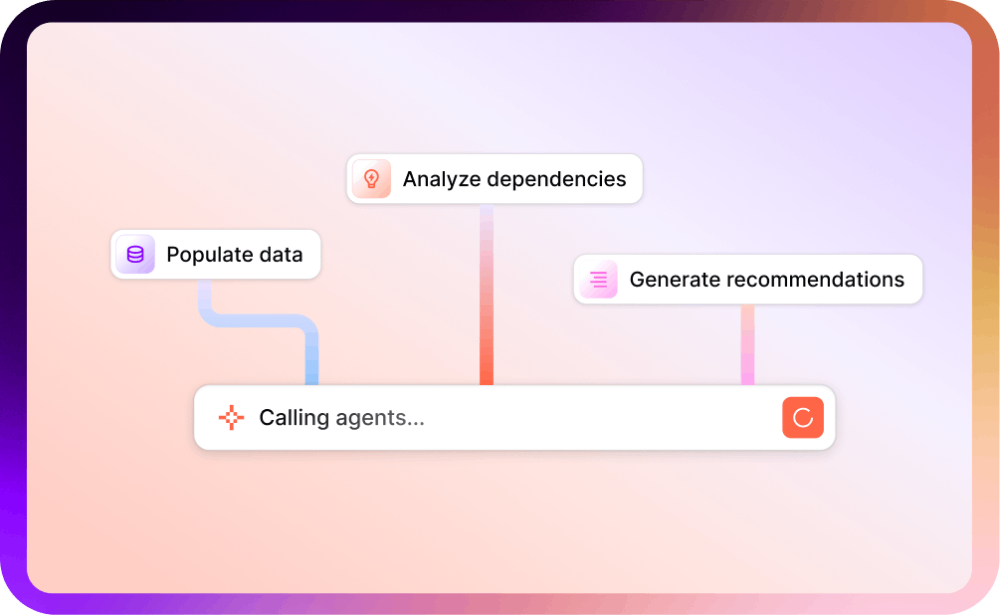
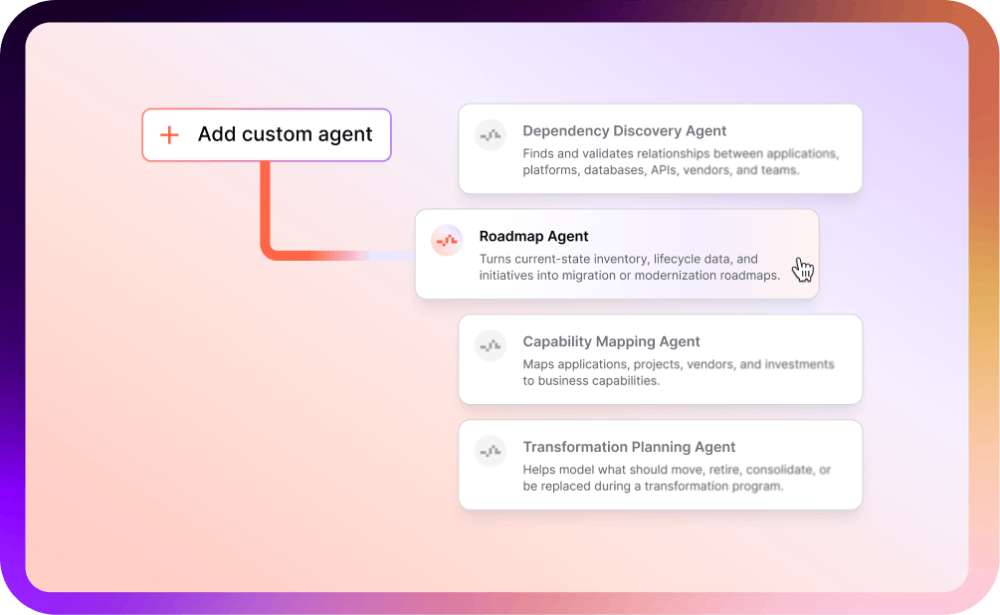
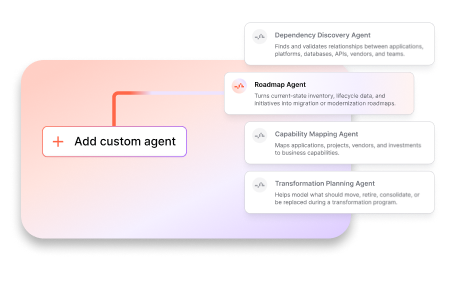
Build Custom Agents for EA Tasks in Ardoq

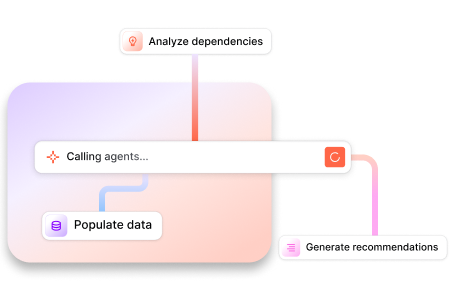
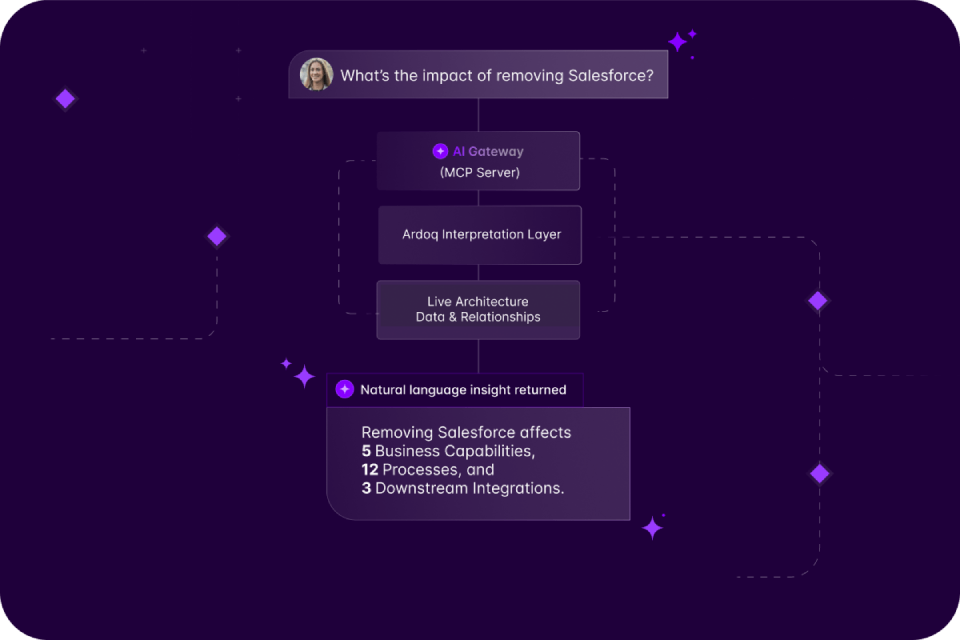
Agentic chat and reasoning engines available via MCP Server and our native AI Chat Assistant.

Generative reasoning and rule-based logic can create context-rich recommendations for CxOs.

Ardoq enforces metamodel constraints and financial rollups deterministically.

Learn More
Build-Your-Own-Agents-2

How Ardoq Uses AI

Ardoq uses AI to accelerate modeling, democratize insights, and make architecture data more useful, while keeping EAs firmly in control.

Reduce Time to Trustworthy Architecture Data

Data-Ingestion
1-AI-Visual-Importer

AI Visual Importer

Upload any image (diagrams, whiteboards, or slide screenshots) and automatically convert them into structured architecture data.

Used for:
Making static diagrams useful, accelerating data ingestion and documentation
Learn More Learn More
2-AI Process-modelling

AI Process Modeling

Instantly create process models inside your architecture platform with AI. Refine them using natural language instructions, import visuals → models in seconds.

Used for:
Process documentation, operational analysis, linking processes to apps, capabilities, departments
Learn More Learn More
3-AI Import Builder

AI Import Builder

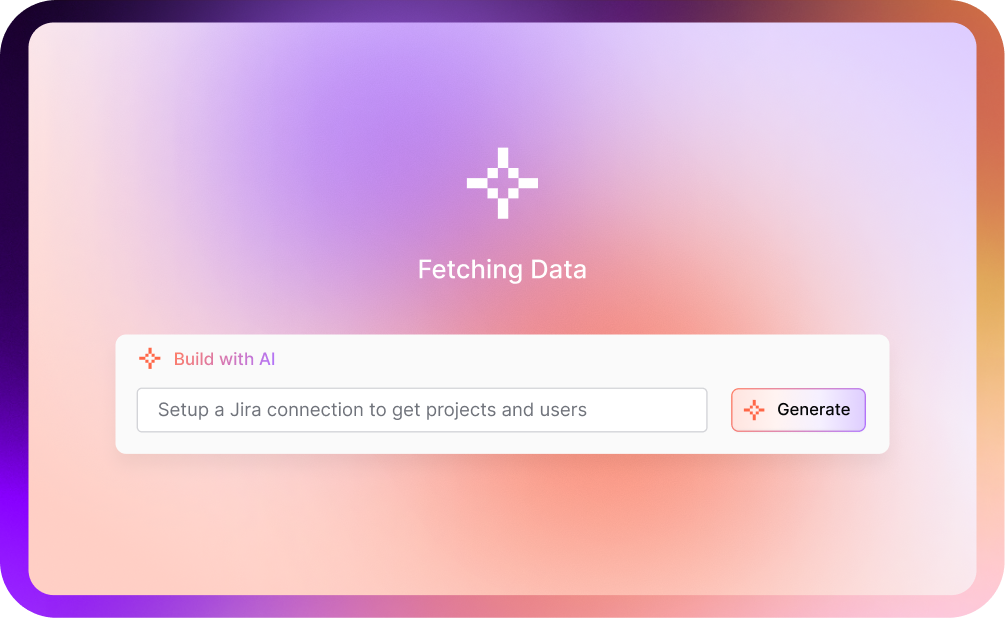
Pull in data to Ardoq from anywhere without custom development. No code. Configure integrations visually in minutes.

Used for:
Automated data ingestions, data enrichment, AI systems & agent discovery via the AI Lens Solution.
Learn More Learn More
4-Data Ingestion Agent

Data Ingestion Agent

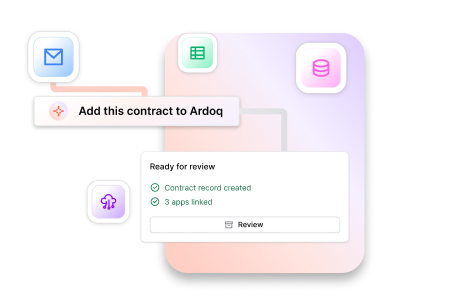
Pulls data from documents, contracts, and existing sources and maps it straight into Ardoq automatically. Expands the AI Assistant and the MCP server to safely populate content into Ardoq.

Used for:
Automated data ingestion, data enrichment and normalization, discrepancy flagging and improved architecture quality
Learn More Learn More
5-AI Web Search

AI Web Search

Pulls current, real-world information from the web and brings it into your architecture work — so your models stay relevant without extra manual effort.

Used for:
Automated data ingestion and completeness
Learn More Learn More

Improve Data Quality, Consistency, and Usability.

Data-Enrichment
1-Foundations Insights Agent

Foundations Insights Agent

help EAs notice important data patterns sooner, such as identifying hidden risks or inconsistencies, so teams can have better conversations and make better choices.

Used for:
Data discrepancy flagging, proactive assessment and improved architecture quality
Learn More Learn More
2-Omnipresent AI Assistant

Omnipresent AI Assistant

Ask questions about your data quality in plain English and receive answers grounded in your live data.

Used for:
Data discrepancy flagging, proactive assessment and improved architecture quality
Learn More Learn More
3-AI Component Descriptions

AI Component Descriptions

Automatically generate consistent, structured descriptions for architecture components based on their relationships.

Used for:
Documentation, portfolio reviews, stakeholder communication
Learn More Learn More
4-AI-Assisted Surveys

AI-Assisted Surveys

Use AI to help generate survey questions and structure responses into usable architecture data.

Used for:
Data collection from application owners and business stakeholders
Learn More Learn More
5-AI Reference Creation

AI Reference Creation

Automatically suggests relationships between components using AI, based on existing architecture data and context.

Used for:
Faster modeling, reduced manual linking, more complete architecture views
Learn More Learn More
6-AI Business Value Propositions

AI Business Value Propositions

Generate draft business value propositions connected to capabilities, value streams, and initiatives.

Used for:
Framing business outcomes, stakeholder communication, value realization discussions
Learn More Learn More
7-AI Viewpoint & Report Descriptions

AI Viewpoint & Report Descriptions

Automatically generate clear, consistent descriptions for viewpoints and reports, grounded in the underlying architecture data.

Used for:
Documentation, stakeholder communication, consistent reporting
Learn More Learn More

From Blank Pages to Usable Models In Minutes

AI-Assisted-Modeling-2
1-AI Capability Maps

AI Capability Maps

Automatically generate multi-level business capability maps based on your organization's context, industry, or imported data.

Used for:
Capability-based planning, heatmaps, cost and risk analysis
Learn More Learn More
2-AI Business Value Streams

AI Business Value Streams

Create draft business value streams in seconds, providing a structured starting point for refinement and alignment. Automatically suggest and create links between architecture elements.

Used for:
Strategy-to-execution traceability, transformation planning
Learn More Learn More
2-AI Process-modelling

AI Process Modeling

Instantly create process models inside your architecture platform with AI. Refine them using natural language instructions, import visuals → models in seconds.

Used for:
Process documentation, operational analysis, linking processes to apps, capabilities, departments
Learn More Learn More
4-Agents in OOTB Solutions

Agents in OOTB Solutions

Purpose-built for the most time-intensive tasks in EA. No custom configuration. No starting from scratch. Your team focuses on decisions — agents handle the data work.

Used for:
App-to-Capability Mapping Agent, Value Stream Mapping Agent, Contract & Document Extraction Agent etc.
Learn More Learn More
5-AI Best Practice Agent (Aria)

AI Best Practice Agent (Aria)

Built-in AI assistant that answers "how do I" questions about using Ardoq and applying best practices.

Used for:
User onboarding, self-service support, Ardoq and EA best practice modeling guidance
Learn More Learn More

Make Insights More Accessible

AI-Powered-2
2-Omnipresent AI Assistant

Omnipresent AI Assistant

Ask questions about your architecture in plain English and receive answers grounded in your live data.

Used for:
Application analysis, dependency questions, impact analysis
Learn More Learn More
2-AI Query Builder

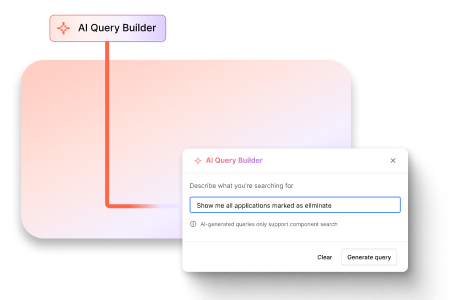
AI Query Builder

Automatically generates Advanced Searches based on natural language input, which users can then refine.

Used for:
Faster reporting, advanced analysis without query expertise
Learn More Learn More
3-AI Viewpoint Creation

AI Viewpoint Creation

Generate draft viewpoints based on natural language prompts, automatically selecting relevant components, relationships, and perspectives.

Used for:
Rapid stakeholder views, impact analysis, executive-ready visuals
Learn More Learn More
4-AI Semantic Search

AI Semantic Search

intent-based discovery, allowing you to find insights using natural language, matching the meaning of your query rather than just exact words. .

Used for:
Rapid data finding, asking architecture questions
Learn More Learn More
5-AI Gateway (MCP Server)

AI Gateway (MCP Server)

Provides permission-aware access to live Ardoq architecture data for external AI tools such as Microsoft Copilot or Claude. Now with SSO capabilities as well.

Used for:
Asking architecture questions from enterprise AI tools like Claude or Teams CoPilot.
Learn More Learn More
6-Custom Agentic Templates

Custom Agentic Templates

Create specialized AI agents that understand your architecture, your data, your way of working.

Used for:
Build your own Agentic functionality that combines tools for accessing and manipulating your data in Ardoq.
Learn More Learn More

Ardoq is Built on a Knowledge Graph

Which is the perfect foundation for the AI era. Graph-based technologies are richer in semantics, explicit in data relationships, and capable of supporting deep inference over time.

Frame 1000011829

Automation-first

Self-updating graphs with AI-powered automations turn data into living systems of insight. No more manual detective work.

Frame 1000011828

Business-centric

Conversational UX and Ardoq Discover democratize insights. Anyone can explore architecture without EA expertise.

Frame 1000011830

Scenario-based

AI-generated outputs created in controlled spaces (scenario-based workflows). Explicit human review required before merging.

Take a Tour
InfoTech Research Group

While competitors offer incremental AI features, Ardoq's integrated approach - combining AI-assisted modeling, governance for AI systems, and a digital twin vision - positions it as a forward-looking player.

InfoTech Research Group

Dec 19, 2025

build-agents-with-ai-960px

Build Agents with Ardoq AI Gateway (MCP Server)

Agentic chat and reasoning engines available via MCP Server and our native AI Chat Assistant.

Generative reasoning and rule-based logic can create context-rich recommendations for CxOs.

Ardoq enforces metamodel constraints and financial rollups deterministically.

ai-lens-960px

Govern Enterprise AI Systems with AI Lens

Connect AI systems to ownership, risk tier, compliance obligations, and business impact within a governed architecture model.

Built to help teams govern AI, manage risk and ownership, and stay compliant.

Frequently Asked Questions (FAQs)

The knowledge graph provides memory, continuity, and structural truth, enriched over time with operational and business data feeds. Our AI builds on that foundation to enable exploration, inference, analysis, and increasingly agent-driven techniques that help organizations reason through complexity, not just visualize it. Automation, reasoning, and governance exist in one system, not as separate layers.

The result is not a chatbot for architects. It is an intelligent decision layer for the enterprise — improving prioritization, clarifying trade-offs, modeling future alternatives, and guiding transformation with explainable, trusted AI outputs grounded in live data and human expertise.

Ardoq was built for this shift. From day one, we designed a graph-native, data-first platform capable of representing how applications, processes, infrastructure, people, costs, policies, initiatives (and now AI systems) connect. But in the AI era, EA data must evolve into enterprise ontology — richer in semantics, explicit in relationships, and capable of supporting inference over time. Static diagrams and traditional EA metamodels are not enough. AI requires fresh, connected, contextual information grounded in the real structure of the enterprise.

Without a proper context graph-based grounding layer, LLM models can hallucinate and give generic, non-actionable answers. LLMs lack enterprise causality. They do not inherently understand how an application change affects downstream capabilities, cost structures, regulatory exposure, or strategic objectives. That is why Ardoq combines a live enterprise knowledge graph combined with EA-practice specific instructions to provide solid context grounding for LLM models. We use generative AI where judgment and ambiguity exist, and deterministic logic where precision is required.

Ardoq is building toward autonomous workflows — but autonomy is never detached from architecture. It operates within enterprise-defined permissions, policies, and structural constraints encoded in the model itself.

Today, AI-generated outputs are draft-based, permission-aware, and reviewable. Over time, we will enable more guided execution — but governance scales with autonomy. Oversight is architectural, not manual.

Autonomy in Ardoq is structured, explainable, and policy-aware.

No. Ardoq’s value is not the language model, it is the reasoning layer around it.

We combine:

  • A live enterprise knowledge graph
  • Schema-aware, permission-filtered retrieval
  • Deterministic logic where precision is required
  • Advanced orchestration
  • Governance enforcement before and after inference

LLMs provide language fluency. Ardoq provides enterprise context and structural intelligence. Without that grounding, generative models hallucinate. With it, they become decision-support systems.

No. We do not train proprietary foundation models. Instead, we use a model-agnostic architecture that selects the best model for the task, optimizing for cost, latency, privacy, and performance.

Our IP is not in the model. It is in:

  • The enterprise ontology
  • The graph structure
  • The reasoning and orchestration layer
  • Governance and constraint enforcement

This ensures we remain resilient as the AI landscape evolves. We are not tied to a single vendor or ecosystem.

We do not charge extra for AI features! Ardoq is the only EA leader delivering flexible, embedded AI without consumption caps, hidden fees, or ecosystem lock-in. Competitors either:

  • Charge extra for AI
  • Restrict usage via caps
  • Dilute AI value realized by narrow ecosystem focus
  • Overlapping features that create complexity

Ardoq has no hidden AI pricing, no usage caps on AI, and no lock-ins. We build AI for all ecosystems, compounded by graph-native AI synergies that drive accuracy, context, and faster decision intelligence that our competitors can’t match.

We recognize that AI expectations and spending currently outpace enterprise readiness. Models change. Costs fluctuate. Vendors consolidate. Ardoq is architected for volatility:

  • Model-agnostic infrastructure
  • Support for external AI via MCP
  • Hybrid neuro-symbolic reasoning
  • Governance-first controls
  • Deterministic validation where required

We design for durability, not hype.

Ardoq’s AI Gateway (MCP Server) exposes architecture data in a structured, schema-aware, and permission-controlled way. It enables external AI tools to reason over enterprise context, not scrape text.

MCP provides:

  • Secure, read-only access
  • Role-based permission enforcement
  • Structured graph traversal
  • Context-rich reasoning inputs

This allows AI to answer complex questions such as:

“Which initiatives align to our strategic objectives, and what would be the downstream impact if delayed?”

The difference is grounding. MCP enables structured enterprise reasoning, not generic Q&A.

We are building toward architecture-governed autonomy. Our roadmap moves from:

  • Insight generation
  • To reasoning and scenario simulation
  • To guided orchestration
  • And eventually to autonomous workflows operating within enterprise constraints

We are not chasing uncontrolled agents.

We are designing agents that operate within structured ontology, governance boundaries, and decision workflows.

The goal is not novelty. The goal is improved prioritization and execution quality.

Check out what we are building actively at www.ardoq.com/ai-labs

You can read more at Ardoq AI: Security & Architecture FAQ and you can get a clear overview of Ardoq’s AI capabilities with a catalogue of links to further KBs, demo videos, blogs etc here: AI Capabilities, Controls & FAQs Page